
If a small fire breaks out at your workplace, a fire extinguisher can calm the flame before professional help arrives.
According to Fire and Emergency NZ (FENZ), over 80% of fires in commercial properties are extinguished by members of the public, with 90% using a fire extinguisher. FENZ recommends using fire extinguishers for the safety of building occupants, particularly in places with higher fire risk, such as kitchens and workspaces involving hot manufacturing processes.
Wondering what your legal obligations are? Learn more about fire extinguisher regulations in NZ and what you need to do to keep your workplace safe.
New Zealand’s Fire Extinguisher Regulations
Fire extinguisher-related rules are spread across multiple legislations and standards, including Fire and Emergency New Zealand Regulations 2018, Health and Safety at Work (Hazardous Substances) Regulations 2017, NZS 4503:2005, and AS/NZS 1841.
Fire and Emergency New Zealand (Fire Safety, Evacuation Procedures, and Evacuation Schemes) Regulations 2018
Fire and Emergency NZ (FENZ) is responsible for managing the legal requirements set in Fire and Emergency New Zealand (Fire Safety, Evacuation Procedures, and Evacuation Schemes) Regulations 2018.
FENZ requires certain building types to install fire extinguishers; we expand on this below in “Do You Need to Install Fire Extinguishers in Your Workplace?”. FENZ can also require other building types to install fire extinguishers, depending on the layout of the building and what activities take place inside.
If you install a fire extinguisher in your building, you must maintain it in accordance with NZS 4503:2005.
Fire and Emergency New Zealand Regulations 2018 also require owners or tenants of certain buildings to train employees in assisting others to evacuate during a fire. The trained employees should know where the firefighting equipment is and how to use it, and hold an evacuation drill at least once every 6 months. This rule applies to buildings such as childcare facilities, educational institutions, hotels, cultural institutions, and other relevant buildings.
Health and Safety at Work (Hazardous Substances) Regulations 2017
The Health and Safety at Work (Hazardous Substances) Regulations 2017 set obligations for companies that deal with dangerous liquids; examples of these include petrol, diesel, LPG, solvents, paints, and industrial chemicals.
Depending on the substances involved, your workplace could require a certain quantity of fire extinguishers. The extinguishers must be regularly tested to ensure safety and effectiveness, and serviced, refilled, or replaced after any use, even if only partially discharged. Fire extinguisher maintenance must be carried out by a competent person in accordance with NZS 4503:2005.
More information can be found in the WorkSafe guide.
NZS 4503:2005—Hand operated fire-fighting equipment
NZS 4503:2005 details how you should maintain your building’s fire extinguishers.
It requires building owners to inspect, service, and maintain all portable fire extinguishers at least once every 12 months. In ‘hostile’ environments that involve more fire hazards than standard workplaces, this is increased to every 6 months.
Different types of fire extinguishers have additional tests that must be conducted at regular intervals. For more information on NZS 4503:2005, read our article on fire extinguisher testing frequency.
Looking for local fire protection testing services? Jim’s Test & Tag provides expert fire equipment inspection and maintenance services across New Zealand. Our team inspects and maintains fire extinguishers, fire blankets, and fire hose reels for accessibility, usage, and general wear and tear.
AS/NZS 1841—Portable Fire Extinguishers
AS/NZS 1841 details requirements for portable fire extinguishers, with specifications for individual extinguisher types listed in each part of the standard.
AS/NZS 1841 is primarily relevant for fire extinguisher manufacturers and importers. Products that meet the standard will have a fire extinguisher certificate number permanently marked on the canister.
Fire Extinguisher Types
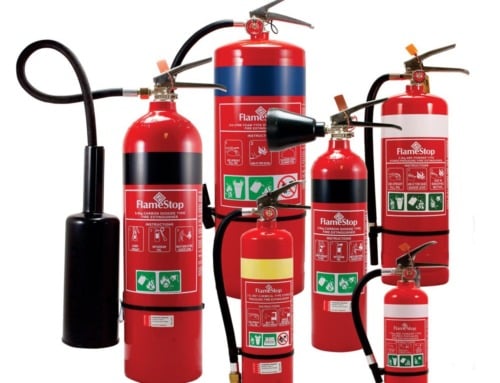
There are five types of fire extinguishing agents, each with varying levels of suitability for the six different fire classes.
| Extinguisher type | Fire class | |||||
|---|---|---|---|---|---|---|
| Class A fires Flammable solids |
Class B fires Flammable liquids |
Class C fires Flammable gases |
Class D fires Flammable metals |
Class E fires Electrical equipment |
Class F fires Cooking oils and fats |
|
| Water | ||||||
| Wet chemical | ||||||
| Foam | ||||||
| Dry powder | ||||||
| Carbon dioxide | ||||||
| Most effective | Limited effectivity | Not effective | ||||
Learn more about the different types of fire safety equipment and classes.
Ensuring Fire Safety Compliance in the Workplace
Do You Need to Install Fire Extinguishers in Your Workplace?
Not all buildings require fire extinguishers on-site, but they can play a vital role in workplace fire safety. Fire extinguishers are small, making them easy for most employees to use. They reduce the risk of damage to people and property, protecting staff and saving money in repairs.
FENZ might require a building to have fire extinguishers installed if it:
- Only has one escape route, no automatic sprinkler system, and FENZ has determined that the activities within the building pose a fire risk
- Contains hazardous substances over the minimum amount outlined in the Health and Safety at Work (Hazardous Substances) Regulations 2017
- Is a ‘relevant building’ which either provides employment for 10+ people OR accommodation for 6+ people, has a sprinkler that complies with the standard NZS 4541:2020—Automatic fire sprinkler systems, and the building owner has notified FENZ that no evacuation scheme is necessary
- Business owners may also need to consult with their insurance company on requirements to install and maintain fire extinguishers onsite.
So, what’s a ‘relevant building’ in the context of the FENZ Regulations 2018? These can include places where:
- 100+ people can gather, regardless of purpose
- 10+ people work
- 6+ people sleep
- Certain quantities of hazardous substances are stored
- Early childhood education and care, nursing, geriatric, and disabled care are provided
Read more about fire extinguisher installation requirements.
How Often Should You Conduct Fire Extinguisher Inspection and Maintenance?
Fire extinguishers must be inspected and serviced at least once every 12 months. In hostile environments with increased fire risks, inspection and servicing must be carried out every 6 months.
Fire extinguisher inspection, servicing, pressure testing, and refilling must be carried out by a competent and qualified service technician in accordance with NZS 4503:2005.
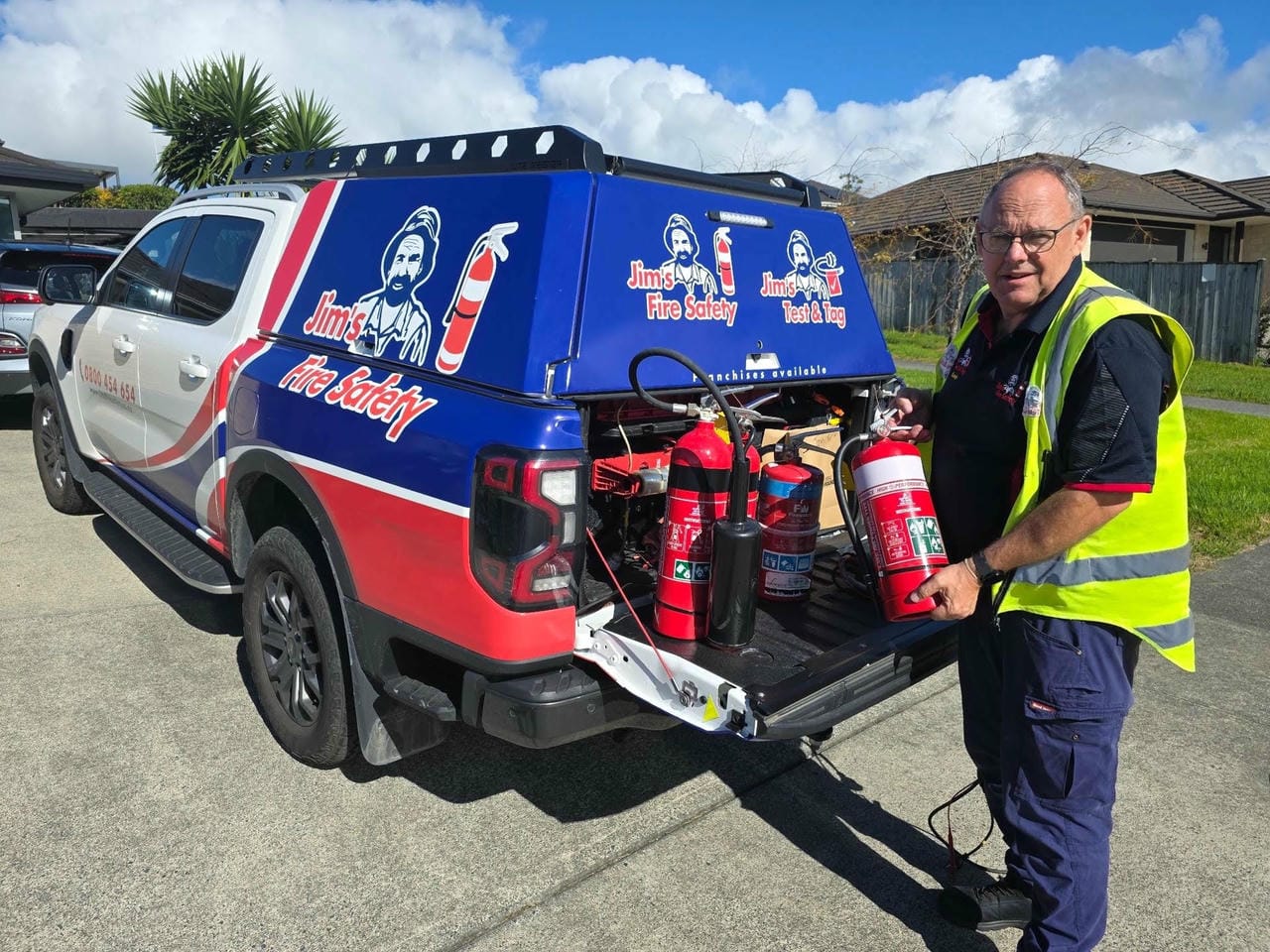
At Jim’s Test & Tag, we offer a comprehensive range of fire safety testing services. Our technicians are trained to inspect fire extinguishers, refill them if required, and confirm the accessibility of your firefighting equipment. It’s easy and only takes a few hours of your time to maintain compliance and safety.
Who Needs to Know How to Use a Fire Extinguisher?
Training staff to use fire extinguishers on-site can help improve workplace safety. They should know:
- Where fire extinguishers are located
- What types of fires specific extinguishers can be used on (if relevant)
- When it is appropriate to attempt to extinguish a fire versus evacuating immediately
Under FENZ evacuation regulations, certain buildings are required to have trained staff who can assist with fire emergency evacuation. These buildings include childcare facilities, schools, cultural institutions, accommodation providers, and relevant buildings. See more fire extinguisher usage and maintenance tips.
Protect Your People with Regular Fire Safety Testing
Keep your people and property safe. Maintaining compliance with fire extinguisher-related legislation means preventing potential harm and hefty fines that can slow down your business.
If you’re looking for a reliable provider to handle your fire extinguisher checks and maintenance, contact Jim’s Test & Tag. We offer fire protection testing services nationwide, with local experts trained to inspect, refill, and maintain fire extinguishers.
Learn more about our services or get a free quote from your local branch today.