
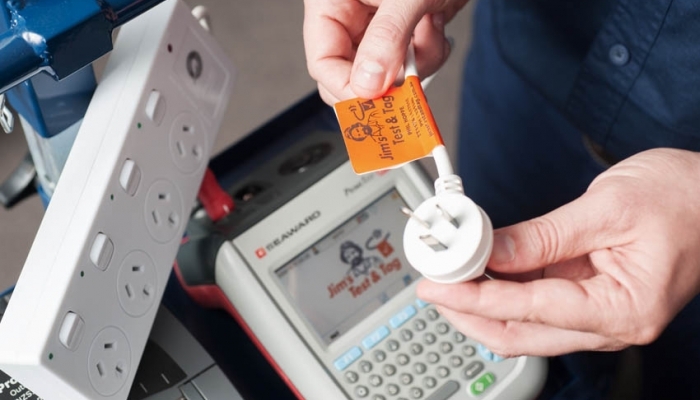
Maintaining electrical safety is a fundamental responsibility for every business. Regular testing and tagging of electrical equipment helps identify faults, reduce risk, and support compliance with applicable workplace safety standards.
At Jim’s Test & Tag, we provide professional testing and tagging services to businesses across New Zealand, helping ensure equipment remains in a safe condition for ongoing use. Our services are delivered by experienced technicians who understand the standards involved and the practical realities of different workplaces.
Our team operates nationwide and offers a fully mobile service. Simply contact us, and we’ll arrange for a technician to attend your site at a time that suits your business.
What is electrical testing and tagging?
Testing and tagging electrical appliances is the process of inspecting and testing devices to confirm they are safe to use. This process involves conducting visual inspections and electrical testing using calibrated testing equipment, such as a portable appliance tester (PAT).
Electrical tag testing is conducted in accordance with AS/NZS 3760 for most workplaces and AS/NZS 3012 for construction sites and demolition environments. These Australian and New Zealand standards set out how equipment should be tested, how often testing is required, and how results must be recorded.
Once testing is complete, appliances tested are tagged with a clear pass or fail label. The tag indicates the test date and the next recommended inspection interval. Detailed reports are provided for all electrical appliances and tools tested, supporting electrical safety compliance and record keeping.
Why electrical tag testing is important
Testing electrical equipment helps identify defects, deterioration, or damage that may not be obvious during normal use.
Electrical equipment can become unsafe over time due to wear, environmental factors, or use in certain circumstances, such as damp conditions or high-use environments. Regular electrical tagging and more frequent testing, where required, help ensure faults are identified early, reducing the likelihood of injury, equipment damage, or operational disruption.
Testing and tagging electrical appliances also supports compliance with electrical safety regulations and helps demonstrate that reasonable steps have been taken to maintain an electrically safe workplace.
What equipment requires testing and tagging?
Any equipment connected to an electrical supply by a flexible cord or plug generally requires testing and tagging. This includes a wide range of electrical appliances, tools, and devices used across different industries.
Equipment may require testing and tagging when it is:
- being used for the first time
- already in service
- returned to service after repair or servicing
- second-hand equipment being reintroduced
- available for hire
Certain residual current devices (RCDs), including RCD-protected equipment, may also require inspection and testing. If you are unsure which items need testing, our technicians can help assess your site and check electrical equipment as part of an initial assessment.
Standards and regulatory requirements for electrical tagging and testing
Testing and tagging electrical appliances in New Zealand is governed by AS/NZS 3760, which outlines inspection methods, testing frequency, and documentation requirements for in-service equipment. For construction and demolition environments, AS/NZS 3012 applies.
Complying with these standards is often legally required under workplace health and safety legislation. Businesses must demonstrate that inspections and testing have been carried out by a competent person and that records are maintained.
Jim’s Test & Tag technicians stay up to date with changes to standards and regulations, ensuring electrical tag testing is carried out correctly and in accordance with current requirements.
How often does equipment need to be tested?
Electrical tag testing frequency depends on the environment, equipment type, and usage. The intervals below represent maximum testing periods under the standards. In some cases, more frequent testing may be required based on risk.
- Construction sites (AS/NZS 3012): every 3 months
- Factories, workshops, and manufacturing sites: every 6 months
- Equipment subject to flexing, abuse, or hostile conditions: every 12 months
- Low-risk environments with minimal movement: every 5 years
- Residential-style environments (hotels, hostels, accommodation): every 2 years
- Commercial cleaning equipment: every 6 months
- Hire equipment: inspection prior to hire; test and tag every 3 months
- Repaired or serviced equipment: before reintroduction to service
Why choose Jim’s Test & Tag?
Jim’s Test & Tag provides professional electrical tag testing services, delivered by technicians with the knowledge and skills to carry out testing correctly. Our team uses calibrated equipment and follows established procedures to ensure accurate results.
Our technicians can perform multiple services in a single visit, helping businesses efficiently manage comprehensive testing and tagging requirements while ensuring compliance. Get a free quote online or contact us at 0800 454 654.