
Do you know what types of fire extinguishers your workplace needs? How about the ideal size? Choosing the correct fire extinguisher size can make all the difference in calming a flame before the fire service arrives.
Let’s review the standard fire extinguisher types in New Zealand and common sizes across different workplace contexts.
What Does Fire Extinguisher Size Refer to?
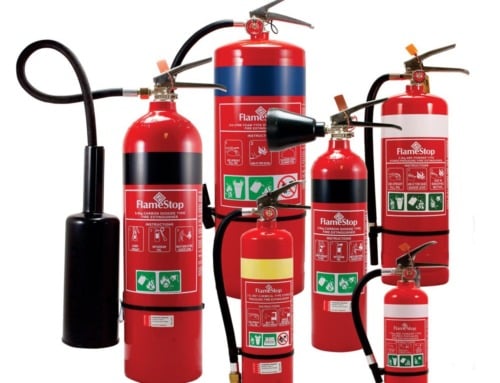
Fire extinguisher size refers to the amount of extinguishing agent within the unit. In New Zealand, dry chemical powder and CO₂ extinguishers are measured in kilograms (kg), while water, foam, and wet chemical extinguishers are measured in litres (L).
The extinguisher’s size affects its discharge time and how large a fire it can reasonably control in turn. But while larger extinguishers have more capacity to fight fire, they’re also heavier and less portable.
Weight can vary between extinguisher types even when capacities seem similar. For example, a 5 kg CO₂ extinguisher is usually heavier than a 9 L water extinguisher since pressurised gas requires a steel container.
Classes of Fire and Extinguisher Types
| Extinguisher type | Fire class | |||||
|---|---|---|---|---|---|---|
| Class A fires Flammable solids |
Class B fires Flammable liquids |
Class C fires Flammable gases |
Class D fires Flammable metals |
Class E fires Electrical equipment |
Class F fires Cooking oils and fats |
|
| Water | ||||||
| Wet chemical | ||||||
| Foam | ||||||
| Dry powder | ||||||
| Carbon dioxide | ||||||
| Most effective | Limited effectivity | Not effective | ||||
Common Fire Extinguisher Measurements by Type
Dry Powder Fire Extinguishers
Dry powder fire extinguishers are suitable for flammable solids, liquids, gases, and electrical equipment. Thanks to their multi-purpose versatility, they’re ideal for usual suburban environments and commercial use.
- 1 kg: Small vehicles, home kitchens, personal use where space is limited
- 2 kg: Cars, vans, small workshops, home garages
- 4.5 kg: Offices, retail spaces, warehouses
- 9 kg: Larger warehouses, factories, dangerous goods storage
Carbon Dioxide Fire Extinguishers
CO₂ extinguishers leave no residue, making them best for electrical equipment. These extinguishers work by replacing the surrounding oxygen with carbon dioxide, so they’re only effective indoors.
- 2 kg: Small electrical panels, home offices, server cabinets
- 3.5kg: Medium sized electrical Panels, server rooms, office areas
- 5 kg: Commercial offices, switch rooms, vehicle service bays
Water Fire Extinguisher
Water extinguishers are suitable for solid flammables such as wood, paper, and textiles. They can be dangerous if used on flammable liquids, energised electrical equipment, or cooking oil fires.
- 9 L: Timber, wood/paper/textile storage areas
Wet Chemical Fire Extinguisher
Specifically designed for fires involving cooking oils and fats, wet chemical extinguishers are essential for commercial kitchen environments.
- 2 L: Small food preparation areas, light-duty kitchens
- 7 L: Kitchens with deep fryers, takeaway shops, restaurants
Foam Fire Extinguisher
Foam extinguishers are suitable for solid and liquid flammables, particularly the latter. They’re commonly used in buildings that risk chemical spills.
- 2 L: Small workshops, vehicles carrying flammable liquids, retail back rooms.
- 6 L: Shops, commercial premises with mixed fire risks.
- 9 L: Warehouses, factories, fuel-handling areas requiring greater coverage.
Fire Extinguisher Sizes by Setting
Common fire extinguisher sizes and types across different workplace environments include:
| Environment | Fire risks | Suitable fire extinguisher size |
|---|---|---|
| Kitchens |
|
|
| Industrial |
|
|
| Offices |
|
|
| Vehicles (boats and cars) |
|
|
Fire Extinguisher Placement and Regulations in NZ
New Zealand’s fire extinguisher guidelines are outlined in Fire and Emergency New Zealand (Fire Safety, Evacuation Procedures, and Evacuation Schemes) Regulations 2018, which states that handheld firefighting equipment must be maintained in accordance with the standard NZS 4503:2005.
NZS 4503:2005 covers how building owners should select, place, and install fire extinguishers. Learn more about NZS 4503:2005 in our blog post on fire extinguisher testing frequency.
Install the Right Fire Extinguisher with Jim’s Test & Tag
Fire extinguishers can offer protection from small fires, but only if you install the right type and size for your environment.
At Jim’s Test & Tag, we provide fire extinguisher installation in addition to our popular inspection and maintenance services. We can assess which type of extinguisher is suited for your environment and the best placement to ensure compliance and accessibility in an emergency. Get a free quote today and let us help you protect your people and premises.