
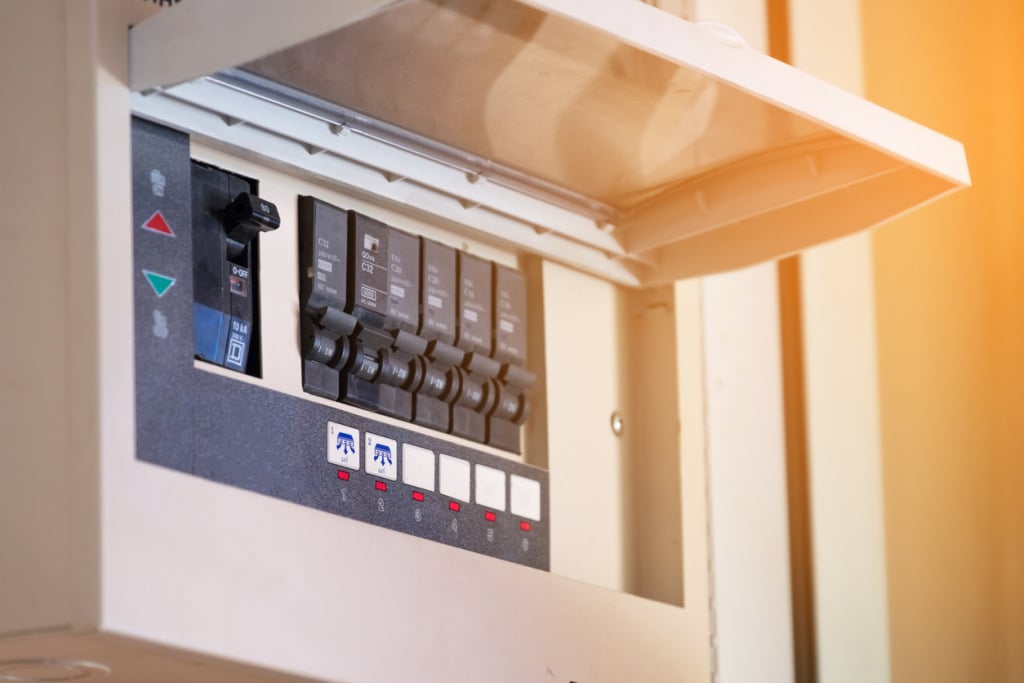
Residual current devices (RCDs), commonly known as safety switches, play a critical role in electrical safety across workplaces, commercial sites, and construction environments. When installed and maintained correctly, an RCD acts as a life-saving device, reducing the risk of electric shock by quickly disconnecting the power supply when a fault is detected.
At Jim’s Test & Tag, we provide professional RCD testing services to businesses across New Zealand. Our technicians conduct in-service safety inspections and testing to ensure RCDs are operating correctly and providing the level of protection needed for your environment.
What is an RCD safety switch?
An RCD is a type of safety switch designed to protect people from injury caused by electrical faults. It works by monitoring the electrical current flowing through a circuit and detecting any imbalance caused by leakage current.
If a fault occurs and the current does not return through the normal path, the RCD trips and disconnects the power supply within the required time. RCDs may be installed at a switchboard, consumer unit, socket outlet, or incorporated into portable devices. Both fixed RCDs and portable RCDs are commonly used across different workplaces and applications.
Types of RCDs used in workplaces
Different types of RCDs are used based on the installation and required level of protection. These include:
- RCCB: Residual current operated circuit breaker without overcurrent protection
- RCBO: Residual current operated circuit breaker with integral overcurrent protection
- SRCD: Socket outlet incorporating a residual current device
- FCURCD: Fused connection unit incorporating a residual current device
- PRCD: Portable residual current device
- CBR: Circuit breaker incorporating residual current protection
- RCM: Residual current monitor
- MRCD: Modular residual current device
Testing procedures and frequency can vary based on the type of RCD installed and the operating environment.
Why RCD safety switch testing is important
RCDs are essential because they protect against serious injury and fatal electric shock during electrical faults. If an RCD fails to operate or does not trip within the required time, people may be exposed to dangerous electricity flowing through equipment or appliances.
Regular testing helps confirm the device is functioning correctly, that the residual current detection works as intended, and that protection remains effective. RCD testing is particularly important in environments where electrical appliances, tools, or equipment are frequently connected and disconnected.
Maintaining RCDs through routine testing ensures electrical safety, reduces the risk of electrical fires, and helps protect people, property, and electrical systems.
Standards for RCD testing in New Zealand
RCD safety switch testing is carried out in accordance with AS/NZS 3760, which outlines inspection and testing requirements for electrical equipment, including RCDs. This standard forms part of broader safety standards and regulations governing workplace safety.
Compliance requires documented testing results and evidence that inspections have been completed by a competent person using appropriate methods. Jim’s Test & Tag technicians follow these procedures closely and maintain detailed records to support compliance obligations.
When do RCDs need to be tested?
Testing frequency depends on the device type, use, and environment. Testing intervals are outlined in Table 4 of AS/NZS 3760 (see below) and may vary between portable and fixed RCD installations.
In some cases, testing may involve a push-button test performed regularly by site staff, supported by periodic professional testing to verify trip time and performance. Our technicians can recommend testing schedules appropriate to your site, including higher-risk environments such as construction sites.


Why choose Jim’s Test & Tag?
Jim’s Test & Tag delivers reliable RCD testing services using certified testing equipment.
Our technicians have the experience and expertise to test RCDs accurately and efficiently across a wide range of electrical installations. Our mobile service enables testing with minimal disruption, helping ensure RCDs operate properly and provide effective protection.
Get a free quote online or contact us at 0800 454 654.